African wax print
Ankara: African Wax Print, and How to Choose It
Ankara is the wax-print cotton you see everywhere in West Africa, and the cloth most of our ready-to-wear is cut from. It is cool, it is durable, it takes tailoring well, and the range of print is effectively infinite. Choosing it well is mostly about reading the cloth rather than the pattern.
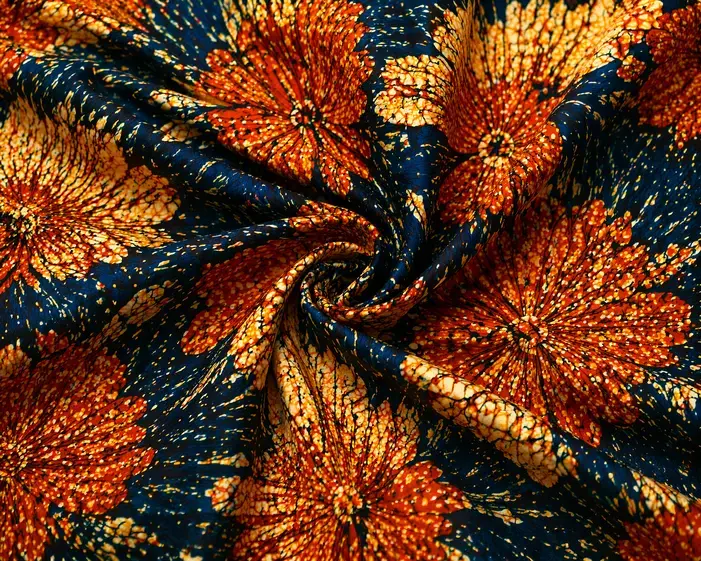
A borrowed technique that became West African
The wax-resist method came from Indonesian batik. Dutch manufacturers industrialised it in the nineteenth century intending to sell back into the Indonesian market, largely failed, and found an enthusiastic market on the West African coast instead.
What happened next is the interesting part. West African traders — overwhelmingly women — began dictating design, colour and motif to the mills, and the cloth became genuinely West African in everything but where it was printed. Prints acquired local names, proverbs and social meanings that had nothing to do with the Netherlands.
Today the cloth is printed in the Netherlands, in Ghana and Nigeria, and in very large volumes in China. The differences between them matter more than the differences between prints.
How to tell good cloth from poor cloth
Look at the reverse. On genuine wax print the pattern penetrates the cloth and the back is nearly as vivid as the front. On a cheap roller print the back is pale and ghostly — that cloth will fade after a few washes.
Feel the weight. Good wax print has a slight stiffness and a faint waxy hand before its first wash, and it softens rather than going limp.
Look for the crackle. Fine veining in the colour is a signature of the wax-resist process, not a fault.
Check the selvedge. Reputable mills print their name and a design number along the edge.
Buying and planning
Ankara is sold in six-yard pieces, and twelve for a full wrapper set. Six yards is comfortably enough for a dress with sleeves, or a skirt and top, with cloth left for a matching headwrap or a bag.
Prints run in limited batches. If you find one you love, buy the whole piece then — coming back in a month for two more yards of the same design usually does not work, and we cannot source what the mill has stopped printing.
Tell us at consultation if the print has a direction or a large repeat. Matching a bold motif across a seam or centring it on a bodice takes extra cloth, and it is the difference between a garment that looks made and one that looks assembled.
What it is like to wear
Cotton, breathable, and forgiving — the reason it is worn daily across the region rather than saved for occasions. It holds a press, takes a structured seam, and survives Lagos humidity better than most alternatives.
It is our default for wrap dresses, tailored blazers, separates and children's wear, and it works as the quiet ground for a Kente or aso oke accent.
What we cut from it
- Wrap dresses and day dresses
- Tailored blazers and separates
- Shirts, skirts and children’s wear
- Matching headwraps and accessories
Care
Cold machine wash inside out, mild detergent, no bleach. Dry in shade. Iron on the reverse on a medium setting.
Have something cut in Ankara
Bring your own cloth or let us source it. Consultations happen in the Lekki atelier or by video call, wherever you are.