Yoruba, South-West Nigeria
Adire: Yoruba Indigo Resist-Dyed Cloth
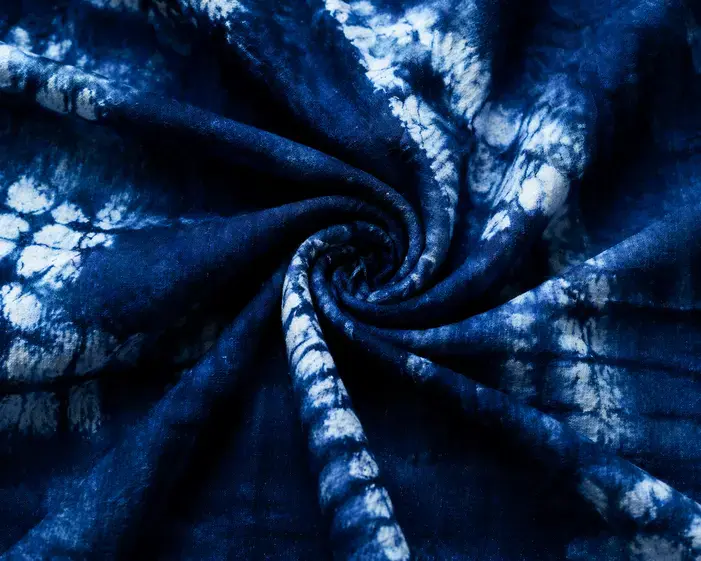
Adire is cloth patterned by stopping dye from reaching parts of it. The word covers the whole family of Yoruba resist techniques, and the results range from a loose tie-dyed spiral to a stencilled pattern precise enough to look printed. It is the cloth we reach for most often when a client wants something recognisably Nigerian that still reads as modern.
Where it comes from
Adire is a Yoruba craft centred on Abeokuta and Ibadan in South-West Nigeria. Simple tied patterns on locally woven, hand-spun cotton came first; the tradition expanded sharply in the early twentieth century when imported shirting cotton became widely available through European textile merchants, and Yoruba women turned a domestic craft into a commercial one. The 1920s and 30s were its commercial peak, and the most intricate starch-resist work continued into the early 1970s.
It has always been women's work. The dyers were artists and traders at once, and the patterns carried names, proverbs and social meaning rather than being decoration alone.
How the patterns are made
Three techniques account for most of what you will see, and they can be combined on one cloth.
Adire oniko is tied resist. The cloth is bound with raffia, or tied around seeds and stones, so the bound areas stay pale. This gives the circles, spirals and starbursts most people picture first.
Adire alabere is stitched resist. Raffia is sewn through the cloth and pulled tight before dyeing, then cut away afterwards. It produces fine, linear, deliberate patterning.
Adire eleko is starch resist, and it is the most skilled of the three. Cassava starch paste is painted on freehand with a feather or a palm rib, or applied through a cut metal stencil, then washed off after dyeing. Freehand eleko is where the real artistry sits, and it is increasingly rare.
The indigo
Traditional adire is dyed with indigo from the elu plant, fermented in large clay or cement pits. The cloth is dipped repeatedly — each dip deepens the colour, and a very dark ground may have taken a dozen or more. The dye oxidises from green to blue as the cloth meets the air, which is the part worth watching if you ever get to a dye pit.
Synthetic indigo largely replaced the plant dye through the twentieth century. It is cheaper and more consistent; it is also why some modern adire crocks onto lighter clothing. Ours is washed and set before it is cut.
What it is like to wear
Adire is medium-weight cotton with enough body to hold a shape, which makes it far more versatile than its reputation as a wrapper cloth suggests. It takes structure well: a fitted shirt dress, a shirt with a proper collar, a straight trouser. It softens with every wash and looks better a year in than the day it was made.
The thing to plan for is that no two lengths match exactly. If a piece needs more than one length of cloth, the panels are chosen together at the start rather than sourced later.
What we cut from it
- Shirt dresses and structured day dresses
- Men’s shirts and short-sleeved buba
- Jackets and unlined blazers
- Panelled detail against plain cloth
Care
Cold hand wash separately for the first three or four washes — indigo bleeds. Dry in shade, not direct sun. Iron on the reverse while very slightly damp.
Have something cut in Adire
Bring your own cloth or let us source it. Consultations happen in the Lekki atelier or by video call, wherever you are.